
Adhesive-Mounted Aerosol Devices: Surface Preparation and Bond Acceptance

An adhesive-mounted aerosol fire suppression device can solve a real cabinet-layout problem: there may be no free DIN rail, no approved drilling area, and no practical clip feature near the intended protected zone. The adhesive layer, however, becomes part of the mounting system. A device that looks secure immediately after installation may still move after temperature cycling, vibration, contamination, cable pull, or an incomplete cure period. That is why adhesive fire suppression mounting surface preparation should be specified, witnessed, and recorded rather than treated as a peel-and-stick task.
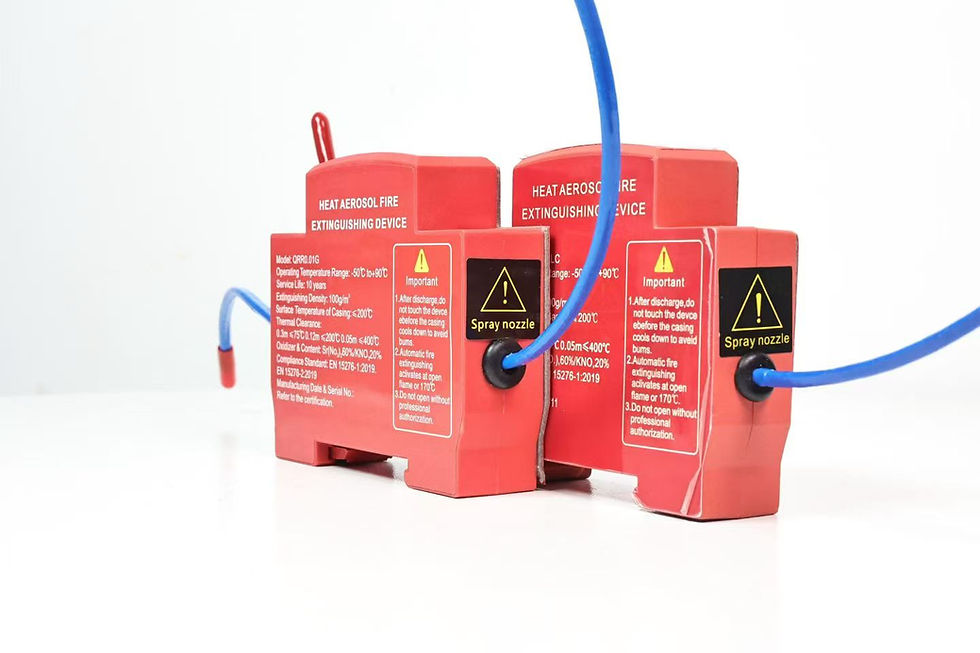
This article presents a field-oriented method for evaluating the cabinet surface, preparing a representative witness coupon, installing the device, and accepting the bond without claiming that one generic adhesive process fits every enclosure. The device supplier's installation instructions, the adhesive manufacturer's technical data, the enclosure coating supplier's limits, and the project fire-safety authority remain controlling documents. Do not infer an allowable protected volume, service life, activation temperature, or certification from the mounting method alone.
Why the cabinet finish controls the mounting decision
Adhesive bonds to the topmost surface, not to the nominal steel beneath it. Powder coat, wet paint, conversion coating, plated steel, stainless steel, and polymer liners can behave differently even when they look clean. A glossy panel may carry silicone polish. A new powder-coated cabinet may contain release residues. An old enclosure may have oil mist, dust, oxidation, chalking, or a repainted patch. A thin coating can also separate from the substrate while the adhesive itself remains intact.
Before choosing adhesive mounting, record the exact panel and finish. Check whether the proposed location is removable, flexible, exposed to condensation, or close to a heat source. Confirm that the device can be inspected and replaced without disturbing live conductors. If the panel flexes under light hand pressure, if the coating is loose, or if the surface cannot be cleaned under the site's electrical isolation procedure, another mounting method should be evaluated.
The existing SUNIOIO overview of adhesive-mounted aerosol devices explains the broader selection context. The present procedure is deliberately narrower: it addresses surface preparation and bond acceptance, not agent sizing or fire-system design.
Surface survey before cleaning
Use a bright inspection light and photograph the exact proposed footprint. The survey should answer five questions before any liner is removed:
What is the substrate and finish, including coating supplier or cabinet model when available?
Is the surface flat across the complete adhesive footprint, without embossing, seams, sharp curvature, or fastener heads?
Can the location remain within the adhesive and device supplier's allowed temperature and humidity range during installation, dwell, and service?
Will the mounted device and thermal activation element remain clear of moving parts, terminal access, ventilation paths, and maintenance tools?
Can the same cleaning and application method be reproduced on a representative witness coupon?
Do not abrade, solvent-wipe, prime, or heat a finished cabinet merely because that treatment is common elsewhere. Abrasion can breach corrosion protection. An incompatible solvent can soften paint. A primer can change flammability, aging, or repair requirements. Use only a process approved for the specific finish and adhesive system.
Build a representative witness coupon
A witness coupon is a small sample that receives the same finish, cleaning method, adhesive lot, pressure, and dwell conditions as the cabinet installation. It gives the installer a controlled place to verify preparation and compare aging effects without pulling on the installed fire-suppression device.
The coupon should match the cabinet's substrate and coating batch as closely as practical. If no matching coupon exists, a hidden noncritical area may be used only when the cabinet owner approves the test and the method cannot damage the finish. Mark the coupon with a unique ID and retain it with the installation record.
The published scope of ISO 4587:2003 covers tensile lap-shear strength testing of rigid-to-rigid bonded assemblies. It is useful as a reminder that specimen geometry, preparation, conditioning, and loading method affect the result. The standard also cautions that this type of test does not by itself provide design information. A field coupon therefore supports process control; it does not independently establish a safe cabinet mounting load.
Preparation and installation sequence
Electrically isolate the cabinet as required by the site's safe-work procedure. Confirm the chosen surface is cool, dry, and accessible.
Record ambient temperature, surface temperature, relative humidity, cabinet ID, location, coating description, device serial or batch reference, adhesive lot, and expiry date.
Remove loose dust with the approved lint-free method. Apply only the cleaner named in the adhesive or device instructions, using a fresh wipe pattern that does not redeposit oil.
Allow the surface to dry for the specified time. Do not judge dryness only by appearance, and do not use unapproved compressed air that may contain oil or water.
Prepare the witness coupon with the same materials, number of wipes, drying interval, and operator technique.
Dry-fit the device with its release liner intact. Mark the outline using a removable method that will not contaminate the bond area.
Remove the liner without touching the adhesive. Place the device once; sliding or lifting it can reduce contact and trap contamination.
Apply the specified pressure over the complete footprint for the specified time. A repeatable roller or fixture is preferable when the supplier defines one.
Support the device and thermal cord so cable weight does not peel the new bond. Record the required dwell or cure period before the cabinet returns to service.
Apply the same pressure and dwell conditions to the witness coupon. Photograph both installations and protect the coupon from accidental disturbance.
Bond acceptance record
The table below is a process template, not a universal acceptance standard. Replace each placeholder with supplier-approved criteria for the actual device, adhesive, coating, and environment.
Record field: Cabinet surface; What to capture: Material, coating, color, condition, location; Acceptance basis: Matches approved substrate and finish
Record field: Contamination check; What to capture: Dust, oil, polish, moisture, corrosion, chalking; Acceptance basis: No unresolved contamination
Record field: Cleaner and method; What to capture: Product, lot, wipe type, wipe count, dry time; Acceptance basis: Matches approved work instruction
Record field: Installation climate; What to capture: Ambient, surface temperature, humidity; Acceptance basis: Within documented application window
Record field: Adhesive traceability; What to capture: Type, lot, expiry, storage record; Acceptance basis: Correct and in date
Record field: Contact application; What to capture: Alignment, pressure tool, force or setting, duration; Acceptance basis: Matches supplier instruction
Record field: Dwell protection; What to capture: Start/end time and temporary support; Acceptance basis: No load before required dwell completes
Record field: Visual bond line; What to capture: Edge contact, gaps, wrinkles, contamination; Acceptance basis: No defect beyond written limit
Record field: Witness coupon; What to capture: Coupon ID, preparation, conditioning, check result; Acceptance basis: Meets project-specific criterion
Record field: Final installation; What to capture: Photo, device ID, thermal-cord routing, inspector; Acceptance basis: Signed and traceable
For example, a project may define a hypothetical coupon check after 24 hours and again after a temperature-conditioning cycle. Those times are examples only. The actual dwell, conditioning range, test load, and failure criterion must come from validated product documentation. Record failure mode as well as pass/fail: adhesive separation, coating pull-off, cohesive adhesive failure, substrate deformation, and edge peel indicate different problems.
Environmental conditioning and reinspection
A cabinet may experience cold starts, solar heating, fan exhaust, washdown humidity, or vibration from nearby machinery. Select conditioning that represents the declared service environment without exposing the fire-suppression device to unapproved tests. Where practical, condition separate witness coupons rather than heating, pulling, or shaking an installed device.
Reinspect after the documented dwell period, after cabinet transport or major maintenance, and at the interval defined by the maintenance plan. Look for edge lift, migration, coating cracks, corrosion paths, cable tension, impact marks, or contamination. A reference photograph with a small scale can make progressive movement visible. Do not add secondary glue, tape, screws, or clamps unless the complete assembly has been approved; an improvised restraint can obstruct discharge or change thermal activation geometry.
Fire-system design remains separate from bond acceptance
A passed bond check only shows that the mounting process met its defined criteria. It does not prove extinguishing performance. ISO 15779:2026 addresses condensed aerosol extinguishing systems and provides a relevant system-level reference for design, installation, testing, and maintenance. Project engineers must still confirm the protected enclosure, leakage, agent quantity, discharge clearances, activation method, electrical isolation, and applicable local fire code.
The same separation applies to installation images. A photograph can verify position and workmanship, but it cannot prove extinguishing concentration or certification. Where a listed or approved system is required, obtain current product-specific evidence for the exact model and configuration rather than relying on a family brochure.
Common rejection conditions
The adhesive was applied over dust, oil, moisture, rust, loose paint, or an unknown surface treatment.
The substrate or coating differs from the qualified sample and no compatibility review exists.
The device was repositioned after initial contact, or the installer touched the adhesive surface.
Cable weight, thermal-cord routing, or door movement applies peel force to the new bond.
Required pressure, dwell time, application temperature, or lot traceability was not recorded.
The enclosure returned to service before the approved dwell period ended.
The witness coupon fails, or the failure occurs in the cabinet coating rather than the adhesive.
A secondary attachment was added without checking discharge clearance and product instructions.
When any rejection condition appears, quarantine the installation record and consult the responsible engineer or supplier. Do not simply press the device back into place and mark it accepted.
Frequently asked questions
Can an adhesive-mounted aerosol device be installed on powder-coated steel?
Only when the device and adhesive documentation accepts the specific powder-coated surface and the project verifies preparation and bond performance. Powder chemistry, texture, cure, contamination, and coating adhesion can vary, so the words powder coated are not enough for approval.
Is a hand pull on the installed device an acceptable bond test?
Usually not. An uncontrolled pull can damage the device, coating, or thermal element and provides no repeatable load record. Use an approved witness-coupon or fixture method with documented criteria.
Can extra tape or sealant improve a weak installation?
Do not add materials without written approval for the complete configuration. Extra material can be incompatible with the coating, change aging behavior, obstruct discharge, or hide edge lift.
Does adhesive bond acceptance prove fire suppression performance?
No. Bond acceptance verifies the mounting process only. Agent sizing, protected volume, activation, discharge clearances, system testing, and code compliance require separate engineering evidence.
Request an installation review
For an engineering review, send cabinet drawings, internal photographs, substrate and coating details, temperature and humidity limits, available mounting area, thermal-cord route, required approvals, and expected order quantity through the SUNIOIO contact page. SUNIOIO / Yueqing Zhaoqing Electric Co., Ltd. can then discuss whether adhesive mounting, clip-on mounting, or DIN rail mounting is the appropriate starting point. Phone: +86 13588953026.


留言